
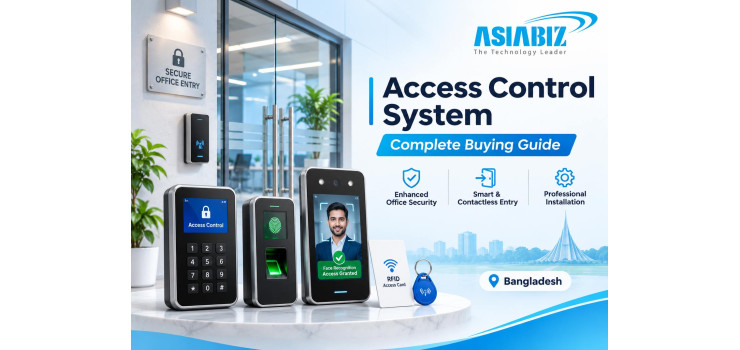
Access Control System in Bangladesh: Complete Buying Guide
A busy office entrance, apartment lobby, or
warehouse door needs more than a traditional key when several people require
different levels of access. Lost keys, shared PINs, and manual visitor logs can
make everyday security difficult.
An access control system in Bangladesh helps
organizations decide who may enter, which doors they can use, and when access
is permitted. This buying guide explains fingerprint, face recognition, RFID,
door-lock components, installation considerations, and costs for homes and
businesses.
Quick Answer: Which Access Control System Should You Buy?
Choose fingerprint or RFID access control for a
small office with a manageable number of users. Consider face recognition or
multi-method authentication for busy entrances that need contactless entry and
flexible permissions. For sensitive areas, use professional door controllers,
suitable locks, and a documented emergency exit plan.
The best solution depends on door type, user count,
entry frequency, reporting needs, and budget—not just the device's appearance.
What Is an Access Control System?
An access control system is a combination of an
identification device, access rules, and an electronically controlled entrance.
Instead of giving everyone a mechanical key, an administrator can assign credentials
to authorized users.
A reader or terminal checks a fingerprint, face,
card, or PIN against permitted users. If access is approved, a controller or
compatible terminal operates the door lock. Many systems also record an event
showing which credential was used and when.
How Does Door Access Control Work?
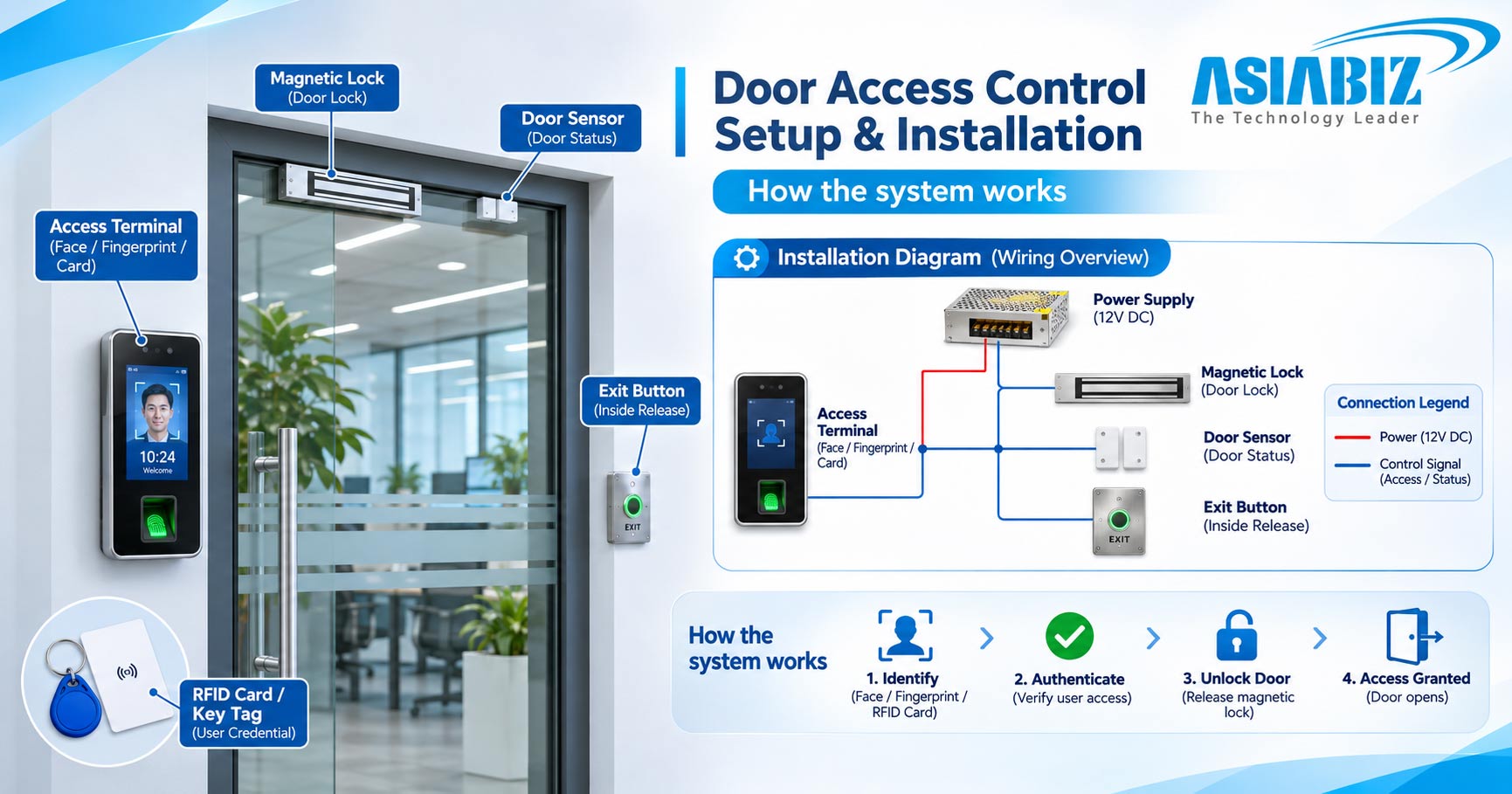
A typical setup follows this sequence:
A visitor or employee presents an approved
credential.
The terminal or controller checks identity and
access permissions.
An authorized request activates the compatible
electric lock.
A door sensor can report whether the door opened or
remained ajar.
Event logs may be sent to management software for
review.
Access control is not a substitute for safe
emergency exit. Door hardware must be designed around evacuation and fire
safety requirements.
Types of Access Control Systems in Bangladesh
Fingerprint Access Control
Fingerprint terminals use enrolled fingerprint
templates to verify people. They are familiar in offices, shops, and staff
entrances. They avoid issuing cards, but worn fingers, moisture, dirt, or poor
enrollment can affect verification. Provide an approved alternative for users
who cannot reliably scan.
Face Recognition Access Control
Face recognition terminals offer contactless entry
and can help manage busy reception points. Performance depends on lighting,
enrollment, camera position, and anti-spoofing capability. Evaluate privacy
arrangements and check the exact product's supported capacity and
authentication methods.
RFID Card Access Control
RFID readers authorize a registered card or tag.
They can be convenient for apartment residents, shared offices, and temporary
staff. Cards can be shared or lost, so administrators need a simple process to
cancel missing cards. Security also depends on the card technology used.
PIN and Multi-Factor Access
PIN codes can suit occasional access, but shared
passwords weaken accountability. Some systems combine card, fingerprint, face,
or PIN. Two-factor authentication is useful for restricted rooms when the
specific terminal and policy support it.
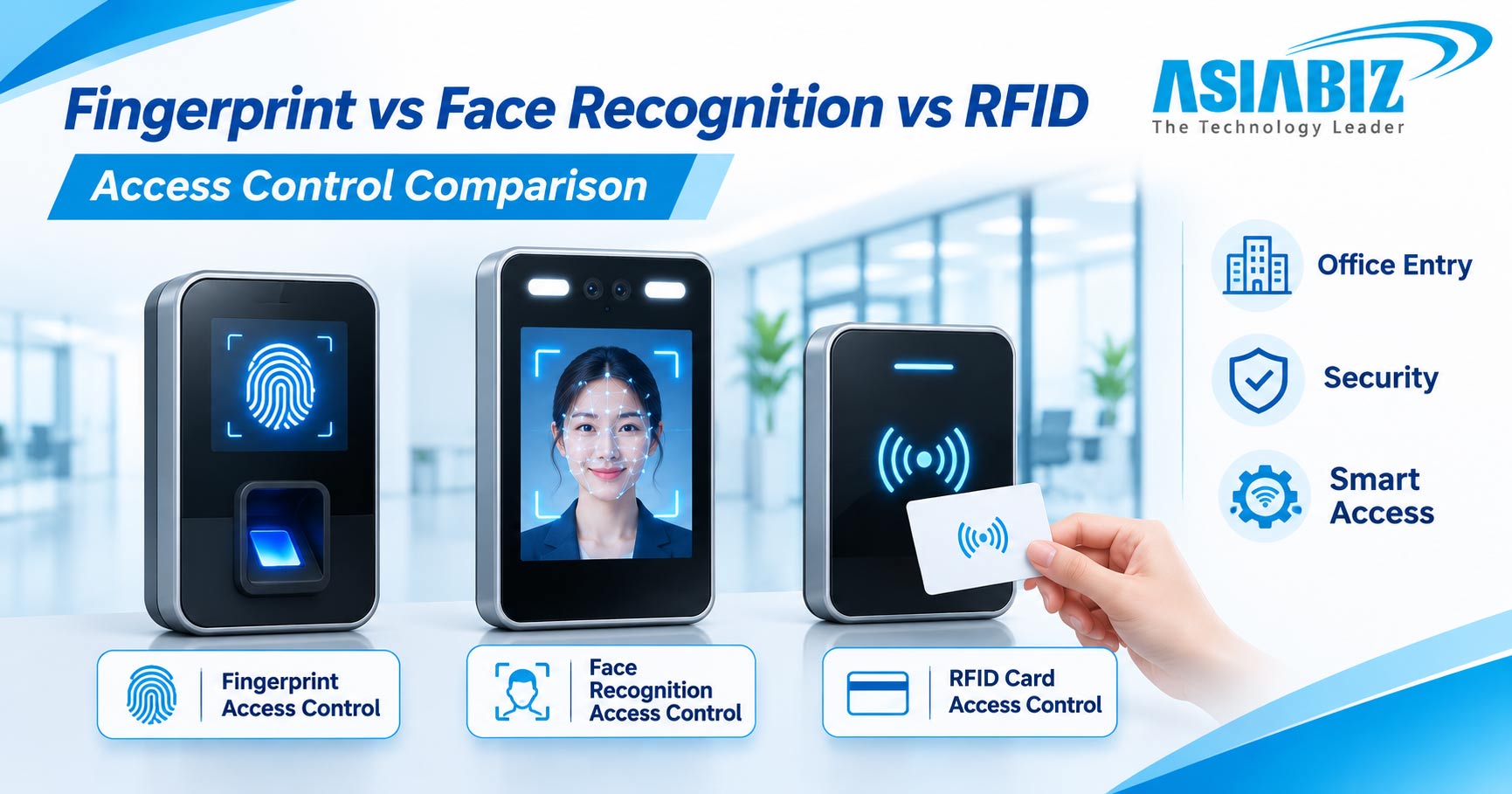
Fingerprint vs Face vs RFID: Comparison
|
Access
method |
Main
advantage |
Main
limitation |
Common
application |
|
Fingerprint |
No physical card required |
Scan quality varies |
Office staff entry |
|
Face recognition |
Contactless verification |
Lighting and privacy considerations |
Busy corporate entrances |
|
RFID card |
Quick and straightforward |
Card can be lost or shared |
Apartments and shared offices |
|
PIN |
Low credential hardware cost |
Codes can be shared |
Low-traffic restricted rooms |
|
Multi-method |
Flexible verification options |
More setup and administration |
Higher-security areas |
No method is automatically the
most secure in every location. Anti-spoofing, credential management, device
configuration, and user training matter.
Access Control vs Time Attendance: What Is the Difference?
A time attendance system records employee clock-in
and clock-out events for HR reports. A door access control system decides
whether a person may unlock a particular door at a particular time.
Some products perform both functions, but an
attendance machine with no suitable lock interface cannot automatically secure
a door. Confirm electric-lock outputs, exit-button inputs, software, user
permissions, and how attendance records are exported before purchase.
For example, an office may want attendance reports
at reception but restrict the server room to IT staff. That requires separate
access permissions even when one management platform handles both jobs.
Main Components of a Door Access Control Setup
A functional installation usually needs more than
the biometric terminal itself. Depending on door construction, it may include
an electromagnetic lock or electric strike, compatible controller, power
supply, exit hardware, door-position sensor, wiring, and backup power.
Magnetic Lock vs Electric Strike
A magnetic lock commonly requires continuous power to
remain locked and releases when power is removed. An electric strike controls
the latch of compatible door hardware and may be configured as fail-safe or
fail-secure, depending on its design.
Neither is universally right. Door material, fire
rating, emergency egress, and local requirements determine what can safely be
installed. A trained installer should confirm the release arrangement before
commissioning.
Network, Software, and UPS
Some terminals communicate through Ethernet,
optional WiFi, USB, or management software. A UPS may maintain operation during
load shedding, but the lock's behavior on power loss must remain safe. Plan
backup procedures for administrators, not only battery runtime.
Where Should You Install Access Control?
Small Office or Retail Shop
Fingerprint or RFID may be practical for a
staff-only entrance. Prioritize simple enrollment, access revocation, and
durable hardware over unnecessary capacity.
Corporate Office or Commercial Building
Face recognition or multi-method terminals can
handle busy entrances. Consider role-based access schedules, reception visitor
management, and software reporting. Multiple doors may need controllers rather
than separate unmanaged terminals.
Apartment and Residential Building
Card access is convenient for residents and
building staff. Ensure that guests, children, delivery workers, and emergency
responders can use an appropriate entry and exit process.
Warehouse, School, or Factory
Evaluate dust, moisture, entry volume, shift
schedules, and power availability. Access control for hazardous or
high-occupancy premises must integrate with a professionally reviewed emergency
plan.
Access Control System Price and Installation Cost in Bangladesh
The total price is not simply the terminal price.
The installed quotation should include a suitable lock, brackets, controller
where required, exit hardware, sensor, cabling, power supply, UPS if necessary,
software licensing, labor, and maintenance.
As an illustrative snapshot from Asiabiz listings
checked in November 2026, the ZKTeco F18 terminal was listed at ৳11,500 and ZKTeco SenseFace
3A at ৳17,400. These are
device listing prices, not complete installed system quotations, and may
change.
For a glass door, metal gate, or fire-rated
entrance, installation requirements can differ substantially. Ask for a site
survey and an itemized quotation instead of relying on a generic per-door rate.
Access Control Devices to Compare at Asiabiz
ZKTeco F18 — Fingerprint and RFID
The ZKTeco F18 supports fingerprint verification,
optional card capacity, and interfaces for an electric lock, door sensor, and
exit button. It is an example of a compact office attendance and entry
terminal.
ZKTeco SenseFace 3A — Multi-Biometric Entry
The ZKTeco SenseFace 3A provides face recognition,
fingerprint and card options, along with door-control interfaces. Verify the
chosen variant's optional WiFi functions before purchase.
Tipsoi Prompt P310 — Office and Workforce Management
The Tipsoi Prompt P310 combines face, fingerprint,
and card verification with door sensor and exit input support. Consider its
software and attendance reporting requirements when comparing systems.
Explore more devices in the Asiabiz Access ControlCollection. Product specifications, prices, stock, and warranties should be
confirmed before ordering.
5 Things to Check Before Buying
Door and
safety: Confirm door material, emergency escape, fire requirements, and
lock behavior during outages.
Users and
permissions: Count staff, visitors, shifts, doors, and required access
schedules.
Credentials:
Decide whether fingerprints, faces, cards, or a combination best fits daily
operations.
Software and
privacy: Check access logs, data retention, admin permissions, secure
storage, and employee notice or consent where appropriate.
Total
ownership cost: Compare hardware, installation, licenses, backup power,
support, and maintenance.
Frequently Asked Questions
Q: Can an access control device work without internet?
A: Many
standalone terminals can verify enrolled users and operate compatible locks
locally. Cloud management or remote reporting may need internet; confirm the
model.
Q: Can one device manage attendance and door access?
A: Yes,
some models combine both. Check lock interfaces, reporting software, and user
permissions rather than assuming every attendance terminal controls doors.
Q: What happens during load shedding?
A: Behavior
depends on the lock, power supply, and UPS. Emergency egress must remain safe.
Have a qualified installer design and test the arrangement.
Q: Is face recognition better than fingerprint?
A: Face
recognition offers touch-free convenience; fingerprint systems may be simpler
for smaller workplaces. Compare accuracy, enrollment, lighting, privacy, and
cost.
Q: How much does access control installation cost in Bangladesh?
A: There
is no universal price. Door type, lock, wiring, controller, backup power, and
labor determine the total. Request an itemized site quotation.
Final Verdict: Which Access Control System Should You Choose?
For a small workplace, fingerprint or RFID may be
sufficient. For busy offices or multiple user groups, face recognition or
multi-method access can provide useful flexibility. Whatever you choose,
prioritize reliable door hardware, privacy, safe exits, and maintainable
software.
Compare suitable systems at Asiabiz Technology and plan installation around the actual entrance and number of users.


Comments
There are no comments for this Article.